When I met Oskar Vizan at the beginning of the year and welcomed him in as co-producer, I suspected he’d be good — but I wasn’t quite prepared for his exceptional levels of focus, detail, insight and motivation. His instinctive sense of what serves the music has been extraordinary, and it’s been a real pleasure working with him over these past few months.
Spring has been especially busy, with an array of guest musicians recording their parts. We’ve had some excellent drum tracks laid down by Oysterband drummer Sean Randle, which have given several songs a real lift. I first met Sean at the wake of Rod Stradling back in January, and I was excited that he immediately offered to play on the album.
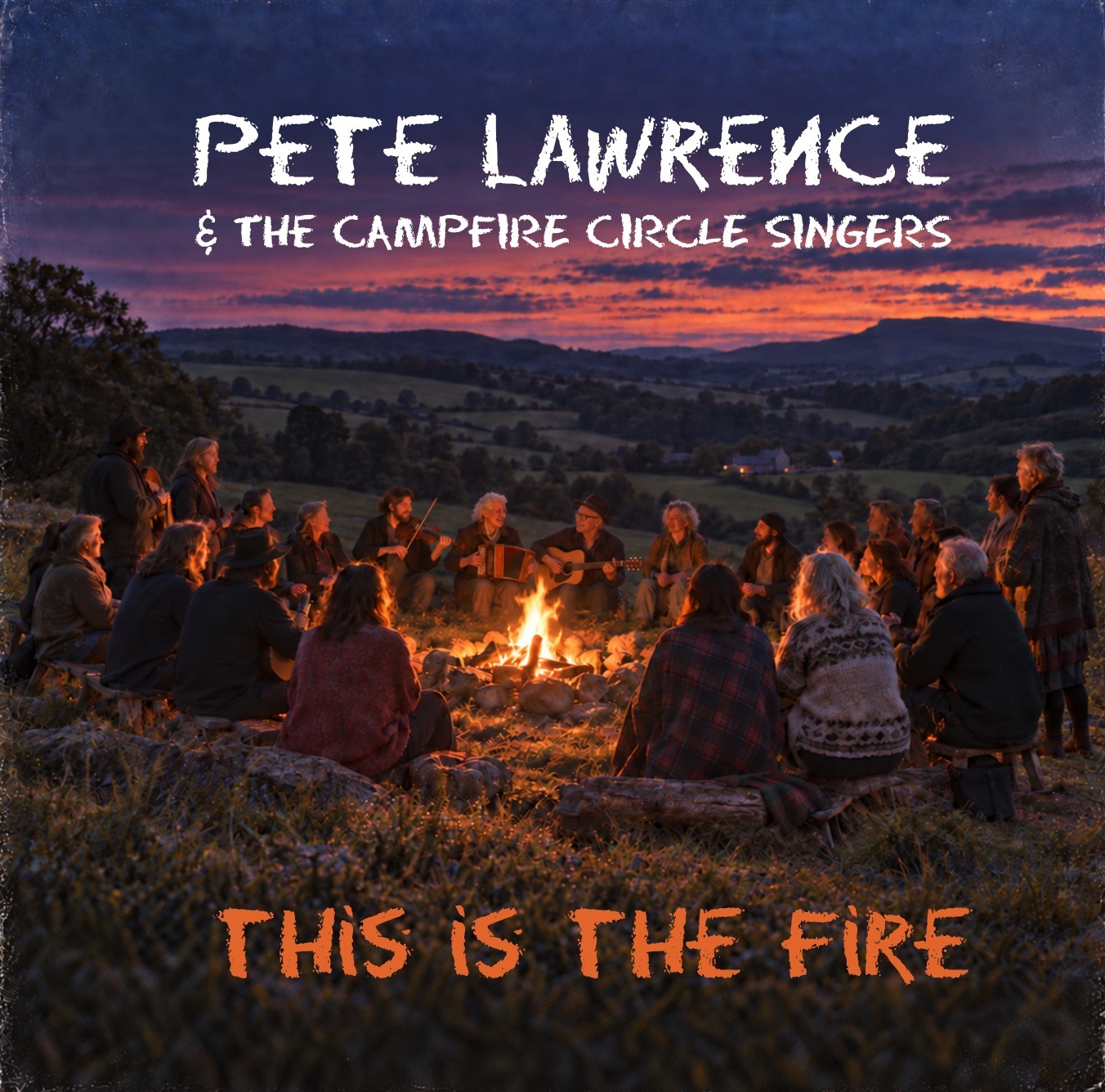
Around the same time I contacted a few musician friends, including Will Pound — maverick musician and squeezebox maestro — who has played on some key tracks. He then recommended a fiddle player based on the Isle of Man, Elizabeth Davidson-Blythe and she recorded a rousing solo on the title track, This Is The Fire.
We also brought in acclaimed jazz pianist Al McSween and Benji Kirkpatrick from Bellowhead, who has just this week added some beautiful guitar, mandolin and bouzouki parts to the Campout chorus song Bubble of Love and my new composition The Power of Love.
A chance referral also led to a brass band arrangement for Rising Up. I’ve been fascinated by the idea of incorporating brass band into a song ever since hearing 'I Want to See the Bright Lights Tonight' by Richard and Linda Thompson back in the 70s — the first “rock” record to feature a live silver band, I believe. We nicknamed our players The Risings Brass Band, and I’m delighted with the arrangement that George Shrapnell created for the one off my favourite tracks.
Another serendipitous moment came via an email exchange with long-standing friend and former The Swingle Singers member Willy Eteson. I mentioned that I was looking for someone to arrange vocal harmonies and chorus singing for the album, and he responded by putting me in touch with Infinite Vocals, a new outfit doing fantastic work across a variety of musical settings.
His wife Jo — who I also know from the Swingles — is closely involved with this exciting new project, and she immediately agreed to come onboard. Last week we received vocals for twelve of the fifteen tracks, which we’re now placing and editing. They sound amazing. I’m also delighted to retain a Swingle connection and bring things full circle, as I had The Swingle Singers appear on my last album, 'Under One Sun' (Chilled By Nature), twenty years ago.
It was also a huge pleasure recently to finally meet a musician I’ve admired since the 70s. On a trip to Kent I spent time with Geoffrey Richardson, who became such an important part of the Canterbury scene with Caravan. As a student, I spent many hours sitting cross-legged on college refectory floors and muddy fields at Reading Festival marvelling at his viola playing. I also loved his work with the iconic Penguin Cafe Orchestra.
Geoffrey and I had been Facebook friends for a while but had never met in person, so I tentatively sent him a demo version of Oh My Days. He came back saying he loved the song and its atmosphere — especially the sense of fragility in the vocal. He then recorded a very moving viola part which could also stand beautifully as an instrumental version of the piece.
A couple of weeks ago he invited me to his Richardsonics Studio in a village just outside Canterbury, where he is currently recording with another Oysterband friend, Alan Prosser. Alongside croissants, fine coffee and a great conversation, I was treated to previews of several tracks from their forthcoming album. They also spontaneously launched into the Penguin Café tour-de-force Music for a Found Harmonium. Embrace the learning experience as they worked it out in front of me here.
As we move towards early summer, the last few live parts are being recorded and the arrangements are falling into place. By mid-July we aim to have all the tracks completed before moving into the mixing phase, which should be finished by the time we stage our Sing Out retreat here at Trealy Farm over the first weekend in September, where we’ll be performing a couple of the more community choir-based songs live.
Even as rough mixes, many of the tracks are already shaping up beautifully, and the word “earworm” has cropped up more than once from friends who’ve had a sneaky preview. I genuinely think there are several songs here with strong potential.
I’ll publish another update as we near completion of the recording process. Then comes the autumn challenge: how best to launch and share the album with the world.
All ideas are welcome.
I’d especially love to find ways of creating videos for some of the tracks, and am looking for anyone who might like to collaborate with us on developing a visual dimension for the project.
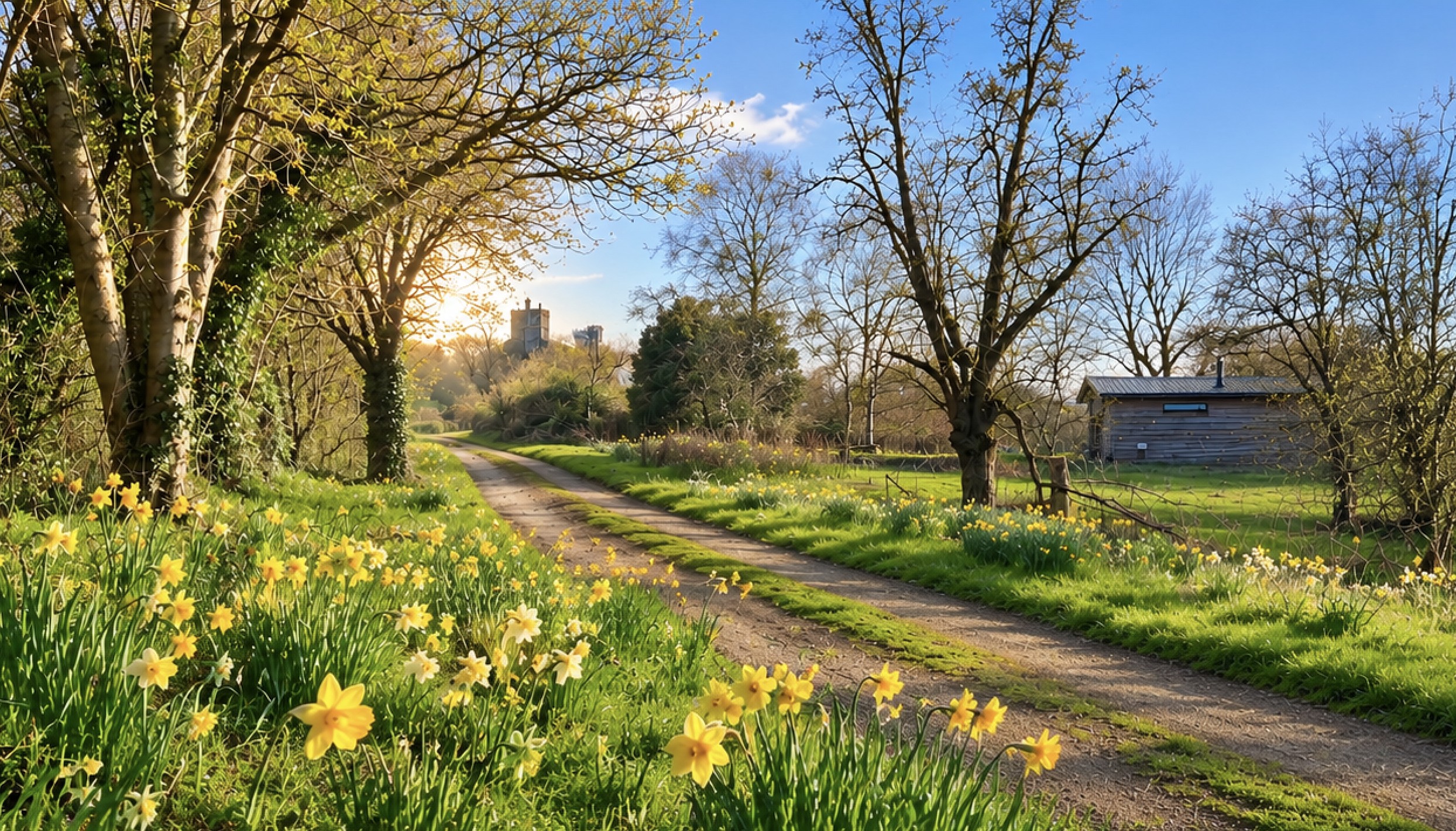
Greetings from Trealy Farm, my current home from home in the hills near Monmouth. It’s been rather wet so far this year and today we have yet more rain bucketing down!
A quick 2026 update from me, as the project is now in full swing. I’ve found a new co-producer to work with, Oskar Vizan, who is based in north London and we’ve already spent a few days in his studio with me putting down some new vocal tracks. Oskar is brilliant to work with, as I think he got the best out of me, for sure as we ripped through seven tracks in two days. he insisted on three takes for every part of every song, so he’s now in the middle of editing it down to the best takes.
It was very exciting to be singing my heart out and advancing so many songs under Oskar’s watchful eye.
I also made a trip to Devon recently to record Marnie Hunter (who I met at Campout last summer) recording some new parts for ‘May You Always’ and a new song ‘Hey You (Heal The World)’ She was in fine voice and will also be singing at this year’s Campout.
Through the late autumn period, I have also recorded three songs with Gerry Diver providing some wonderful instrumentation on the backing tracks. So each track has its own feel and approach and I am going through a wish list, inviting a few musicians and singers to come in and play their part too. Oskar will be pulling it all together with me into a cohesive whole.
We are aiming to have recordings done by mid July and mixes for late August. So we can then start to work out a launch campaign, with an album release looking likely for early next year.
This week, I have been preparing some backing tracks for two of the songs to sing at this weekend’s Winter Gathering here at the farm. We still have a handful of tickets if anyone fancies joining us later in the day.
Keep in touch with the album’s progress via my website
In December 2000, The Big Chill hosted one of the most memorable concerts I have had the pleasure to be involved with. Tom Middleton, our resident DJ through the years and now esteemed club and yoga session DJ, composer and sleep therapist, fulfilled an ambition. He got to score and perform two of the tracks from the seminal album 76:14 by Global Communication, his project at the time with Mark Pritchard. Tom invited me to play the DJ warm-up set for him, which I really enjoyed doing, along with Muffled Visions images on the night. The resulting mix ‘Deep and Crisp and Even’ has remained popular since its inception and I'm happy to say, has already received several thousand downloads from a variety of sites. It’s also one of my most loved mixes and seems to suit a variety of occasions. I made it for my children, Ella and Joey.
To mark the 20th anniversary, I revisited the Deep and Crisp and Even mix I created for that iconic night and put some DIY visuals to it, something I have always wanted to do. Enforced lockdown here on Paros gave me a few days spare time to essentially create a film of slides around the mix (original photos by myself as well as found footage on the web). It clocks in at 62 minutes, a sound and vision scape through choral, classical, electronica, piano music and more.
"We watched it during our solstice dinner, still beautiful. We also listen to it every Christmas day morning, a tradition born out of something that, at the time, wasn’t a tradition…..but now is so ingrained in our families christmas it absolutely is. 25 years ….." Kate Kinsella
And two more seasonal mixes thrown into the Christmas stocking with love
It’s been a few weeks since the ‘rewards’ part of the Crowdfund for ‘This Is The Fire’ finished but the campaign remains open for any further donations and I’d like to thank you all for your generosity. It has been a fantastic feeling to reach our target and for the dream to start to turn to reality.
This week, Gerry Diver, my co-producer finishes his autumn tour and has already started creating some new backing tracks. I received the first one a couple of days ago and it was a surprise early Birthday present to hear ‘May You Always’ transformed into something else together.
We will be working away, track by track, over the late autumn and winter days to craft the album and I intend to post some regular updates here and on social media too. We hope to organise some singing sessions for a small group, as many of the tracks lend themselves to community choir treatment so I will keep you in the loop when we are further down the line.
At the end of August we had a wonderful community singing weekend at Trealy Farm near Monmouth, where I live when I am back in the UK and we’ve just confirmed another one for next year, so put September 4-6th. Details to follow.
I’m also DJing in my hometown Leamington Spa on Saturday 13th December where I will also be screening my winter solstice audio visual mix ‘Deep and Crisp and Even’ at Temperance Bar. Then we have our Campfire Winter Gathering booked in, also at Trealy Farm for February 20-22.
Hope to see you at one of these events or elsewhere soon. Enjoy the beautiful autumn colours! Here in Paros we've missed them but have had some dramatic clear nights skies and shooting stars.
It’s dawning on more and more people, but we need to remind ourselves: Music is a superpower and we underestimate it at our own peril. It can move, inspire, connect, heal, be a source of joy, an art form, a signpost to a different world and also deliver a potent message. In short, it has all the tools to change the world.
My own relationship with music has been a rich and consistent seam through my life, starting with an appreciation of music in our house, then learning to play drums with bands in various halls and venues in my hometown of Leamington Spa (where my Dad had gone on to host the weekly Town Hall dance in post-war years) from age 15. I immediately saw the power of music to gather people and bring great joy. Whilst early 70s prog rock, glam rock and funk had demonstrated how music and fashion can playfully dance and bounce off each other, the perfectly-timed arrival of punk while I was a sociology student at Reading University was a major force, a disrupter and a confirmation to many that the DIY spirit was anarchic in the best ways and a great enabler as well as something of a wake up call for the stuffy music business.
After learning my trade at Our Price Records and Making Waves distribution in the early 80s, I used that sense of DIY spirit to start my first self-employed endeavour - my own label, Cooking Vinyl in 1986. The second release on the label was in many ways the ultimate homespun production, a recording on a pre-walkman, a Sony Corder around a campfire at Kerrville folk festival with a woman who I’d just met that evening after hearing her singing earlier. That cassette recording of a hitherto unknown talent, released as The Texas Campfire Tapes proved to be a huge and unlikely success, selling close to a million albums and setting up a career for the singer.
Both the DIY spirit of that auspicious recording and the importance of the spontaneous campfire setting have had a profound effect on my subsequent work around music and community. Until recently, I had almost forgotten that while I was a journalist writing for the excellent fRoots (Folk Roots) magazine at that time, I’d received a letter from none other than Pete Seeger, commenting on a previous column and talking about the way music is presented. I quote from my column “Seeger suggested that the rise and advancement of technology has brought about a situation where people seem to mainly be interested in what music is being made into microphones rather than what is happening in bars and pubs, kitchens or on buses and hiking trails, which in turn is reducing the human race to spectators rather than participants.”
It’s interesting now that Seeger’s legacy is very much in the ascendant now, additionally prompted by his major role in the recent Dylan biopic, as are the likes of Joan Baez and other 60s activist / pacifist musicians. Their influence now seems to be all-pervasive and the time feels right. We’re still singing their songs and in the current climate of division and war, their message is more vital than ever.
My father used to tell me frequently that “love is the answer” and that “music was the universal language, the connector. I believed him and grew to love hearing his tales of how love and music could intertwine, how they could work their magical spells together.
Despite being a conscientious objector, he had somehow become hooked into the war effort in the early forties and had ended up on the RAF front line in Cherbourg as the first arrivals shortly after D-Day. What he did then was remarkable, turning his attentions from war to music. I still have a cutting from a local paper which tells his story “With the guns of war rumbling in the background, Ray and his fellow members of the Embarkation Unit dance band staged a show in the town - the first British dance band to be heard in France since pre-war days. Dad used to tell me about that evening “the greatest in his life” as the newspaper quotes him. “Just liberated, the French went mad. They showered us with affection and gifts and the members of the band were overcome with emotion”
My Dad, on the right, on a Cherbourg rooftop
Thanks to my Dad’s initiation, one of my greatest gifts has been to live, breathe and feel music on a variety of levels. Its power to make us get up, dance and shake it all out, to cry at its delicate beauty, to marvel at the way music and words can combine to create paeans to the times, to elevate music as a potent marker of an era, to bottle up and keep memories alive. And to create a feeling of hope and a sense of purpose…
In today’s divided world, where are the universal anthems? There is a sense that new songs of hope and empowerment are needed more than ever, when we consider the impact of classics such as 'We Shall Overcome', 'This Land Is Your Land' and 'Blowin’ in the Wind'. ‘This Land is Your Land’ is as good an example of heartfelt national conscience as we are likely to hear in our lifetime. ‘We Shall Overcome’ and ‘If I Had a Hammer’ are perfect examples of songs of hope and intention, of inspiration and aspiration.
These weren’t just soundtracks to activism; they were tools of resistance, uniting voices in community, on marches and at gatherings. The voices of hope, justice, connection and vision were led by the likes of Seeger, Woody Guthrie, Odetta, Sweet Honey in the Rock, Joan Baez, The Weavers and Peter, Paul and Mary and we're still singing their anthems now. That’s as good a reason as any to start writing meaningful songs of hope and to draw on that formative era for inspiration.
This lineage has continued through various eras, whether through black pride rallying cries such as ‘Fight The Power’ by Public Enemy or more subtle anti-war songs such as Billy Bragg’s ‘Between the Wars’ or Elvis Costello’s ’Shipbuilding’. To witness how a song can help achieve outcomes, look no further than The Special AKA’s ‘Free Nelson Mandela’. The recent anniversary screenings of the Live Aid story are a timely reminder that a united musical front can have considerable global impact in the corridors of power.
More recently, it has been interesting to observe the reactions to the Glastonbury moral ‘outrage’ prompted by the Kneecap and Bob Vylan appearances and the various narratives that people have adopted in response.
I was interviewed recently on BBC 5 Live about the inspiration behind my new album ’This Is The Fire’. It was interesting to note that the station ran the whole pre-recorded interview (17 minutes) apart from my mention of the word ‘genocide’. They’d asked me what I made of the events at Glastonbury and my response was that songs and actions of protest in this case had obviously been motivated to anger by the ongoing war which some would describe as ‘genocide’. Clearly, that level of impartiality wasn’t going to wash its way through the editing room.
Protest comes in many shapes and forms, but one thing that most of us would agree on is that in order to birth new ways of doing things and new politics, as a top priority, we need to fast-track the death the outmoded, the war mongering, the ugliness inherent in nationalistic domination, the criminality of inaction of certain western governments. The furore at Glastonbury was a case study in shifting the agenda so that the attention was placed on those protesting against the horrors of wars and clamping them down, rather than the masters of the wars.
The nuance of language we choose to use is vitally important if we’re to attempt to bring people together. It could be argued that the call for the death of or dismantling of a violent regime and its task force is ultimately as much about peacekeeping as songs about love and connection, just expressed in a very different way, with punk attitude from those who are probably at the end of their tether over the hypocrisy of those who are defending what many indeed see as genocide. At least more and more people are now waking up to the media machinations and the divisive political games.
Bob Vylan talked about the sanctity of human life and freedom of speech. This, plus our sense of our own sovereignty and keeping our moral compass intact is what will ultimately win through. The sense of hope and the spark for big change is palpable, whether expressed from a place of joy and serenity or from parallel place of anger and rage. This is where the line between forceful protest and reconciliation comes into sharp focus. We need both in parallel as we remember that movements for change are often fuelled by music. And that can come in many shades.
Because I wholeheartedly believe in the power of music to change the way we see the world and because I am really excited by the new songs I have written. They are songs designed to be sung in community, some of which we have already unveiled at our Campout last year.
Much empowerment (both individually and collectively) has come from building community and facilitating an environment where optimism can flourish and where social change can happen. That is the primary focus of what I hope will be my first album in two decades, a community-powered record that is bringing together songs of hope, of inspiration, of protest, of heart connection and of universal love.
It's worth remembering that moments of change are often fuelled by song. As Brian Eno famously said "Singing together is the key to world peace”, described by BBC 5 Live on my interview as “lofty” in its aims. But yesterday’s ‘Kumbaya’ is today’s ‘Lofty’. We have to start from a utopian viewpoint. How else would we be able to reimagine a better world? Let’s not forget to dream big.
Protest music of any era comes from the heart and the times we live in. We need to reinstate songs which provide a visceral response. Reclaim the ‘Kumbaya’ spirit, take it back from the cynics and to dream a new world into being through song.
There is an indefinable quality to the buzz we can all feel when in glorious song with others, each playing our part but creating harmony together. It's a great starting point in establishing common ground, imagining the changes we need to be making to find hope and inspiration through connection and through finding our voices, individually and collectively. Once we find our voices in community, the sense that anything is possible starts to come into play…
So the calling is to craft this album of multi-purpose simple and timeless melodic pieces rooted in a hymnal folk tradition, songs intended for everybody to sing that can work in a variety of settings. The perfect antidote to a fragmented world.
That's why I am very excited to be launching 'This Is The Fire' as an album project. The songs are already written and ready for that special production touch that will transform 13 songs into a work of art. I hope you will come with me on this journey and support the realisation of this dream.